
In the ever-evolving and unpredictable landscape of the Nepalese economy, it is crucial for individuals to be well-informed with relevant economic data. Various factors such as inflation, interest rates, and GDP growth rates significantly impact various aspects of our daily lives. These elements influence our purchasing power, lifestyle, employment opportunities, and more, all of which depend on the country’s economic health.
Did you know that the Nepal Rastriya Bank’s annual report showed that inflation in Nepal is 4.04%? Or that the trade deficit decreased by 2.3%? What opportunities does this present for us, the citizens? What other economic factors affect our lives, and how can we protect ourselves, our families, and our businesses from the risks associated with the uncertain direction of the Nepalese economy? Let’s examine factors, how they have been shaping the Nepalese economy, and discuss strategies to manage these challenges.
1. GDP Growth Rate
Gross Domestic Production (GDP) is defined as the total monetary value of the finished goods and services produced by a company usually within a year or a quarter. It accounts for what people, businesses and the Government are spending plus the net export (what Nepal exports minus what Nepal imports). GDP growth rate is the rate at which the GDP, by extension the economy, is growing year over year or quarterly.
For the year 2022/2023 Nepal’s GDP growth rate has declined to 2.16% from an impressive 5.26 previous year. This hints toward a deceleration in economic activities. NRB has cited the causes to be:
- Slowdown in construction
- Increased Interest rate
- Decreased consumer spending
- People leaving the country
The effect of whose has clearly bled into other factors. A decrease in GDP growth rate indicates that the whole economic stimulation of a country has slowed down. People aren’t spending more, i.e. the consumption has decreased. If people aren’t consuming, industries and businesses don’t have enough revenue to keep themselves afloat. This will either cause prices to increase ( Since they will try to compensate for the loss of consumers with increase in prices) or will cause them to shut down completely (which will increase unemployment rate).
2. Inflation
Inflation is the rate of change of price of goods and services in a country overtime. Consumer price inflation is a method of gauging inflation by checking the monthly basket of goods and services. Inflation has settled to 4.4% this year (compared to 7.41% last year) providing a relief to people who have been struggling with rising living expenses recently.
Inflation Breakdown
For Food and beverages, we can see the values have been rising up. This means, people will have to allocate more of their income to meet their needs for the presented few food staples.
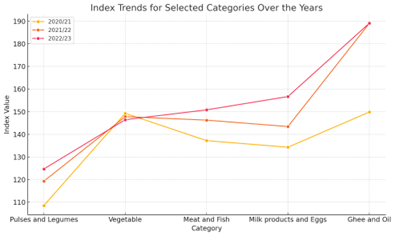
Fig 1: Y-o-Y trend for Food and Beverage category
If we take a look at the graph above, we can see the item basket for the Food and Beverage category. Since the area under the graph is increasing with each consequent year, we can assess that the rate of price change is increasing. Similarly, taking a look at the Non-Food and Beverage category, we follow the suit, with the graph getting bigger each subsequent year.
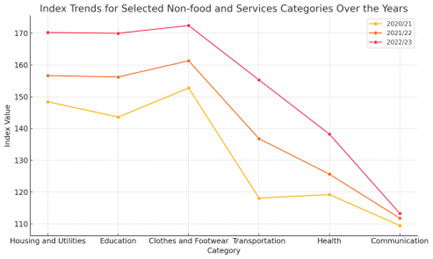
Fig 2: Y-o-Y trend of Non-Food and Service category
3. Remittance
Remittance refers to money sent back to Nepal by a person working in a foreign country. Remittance inflow has increased by 19.2%, compared to the same period last year, indicating a positive signal for the country. It shows that the purchasing power of many households who are reliant on money sent by family members abroad will increase. At times of economic uncertainty, increase of remittance will provide a financial cushion. Paired with the aforementioned rising prices, it shows a positive signal for many family’s economic(financial) stability.
Foreign Currency Reserve
Further, since remittance contributes a significant portion to the Foreign Currency Reserve. As such, the Foreign exchange reserve increased by 26.5%. This indicates that there are sufficient reserves to cover the prospective merchandise import for 15.1 months and service imports for 12.1 months.
4. Banks, Credits and Deposits
The number of Banks and Financial institutes (BFIs) licensed by Nepal Rastra Bank has remained constant at 110 institutes. Compared to previous year, the deposits increased by 12.8% and private sector lending increased by 5.2%. Increase in liquidity from deposits allows banks to lend more money while still meeting minimum requirements set by Nepal Rastra Bank. With decrease in interest rate on a y-o-y basis, people and private sectors might experience some leniency in borrowing of funds.
5. NEPSE and Capital Market
The trends in Nepal Stock Exchange and Capital Market – a place where long term debt and equity securities are bought – has seen a positive trend. NEPSE index has slowly recovered its way to 1998.89 in mid-May as compared to 1821.65 last year. The number of listed companies has also increased to 272 from 253 in the review period. With the Stock Market capitalization increasing to Rs.3169.48 Billion from Rs.2657.76 Billion, we can conclude that this increase in volume is a result of increase of people’s participation and trust towards the Capital Market.
What’s next?
We observed a decline in GDP’s growth has caused a decrease in various economic processes. It has affected inflation rates, remittance etc. With increase in deposit, banks have additional liquidity for lending. As an enterprise owner, it is necessary to assess how these things affect one’s business. As such it is crucial to have professional consulting. To get the best business consulting to protect yourself from economic uncertainties, give us a call at +977 9802348581 or leave a message below.
Leave a Reply