
If you’ve noticed a new deduction on your payslip and nobody’s fully explained it, you’re not alone. Nepal has been moving employees from the old Provident Fund system to the Social Security Fund, and for most people, the whole thing arrived as a line-item change with no context; a slightly bigger deduction and a vague sense that something about retirement changed.
It did. And it’s better news than most people realize, once you see the whole picture.
Here’s the version we wish someone had given us before our first SSF paycheck.
The short version
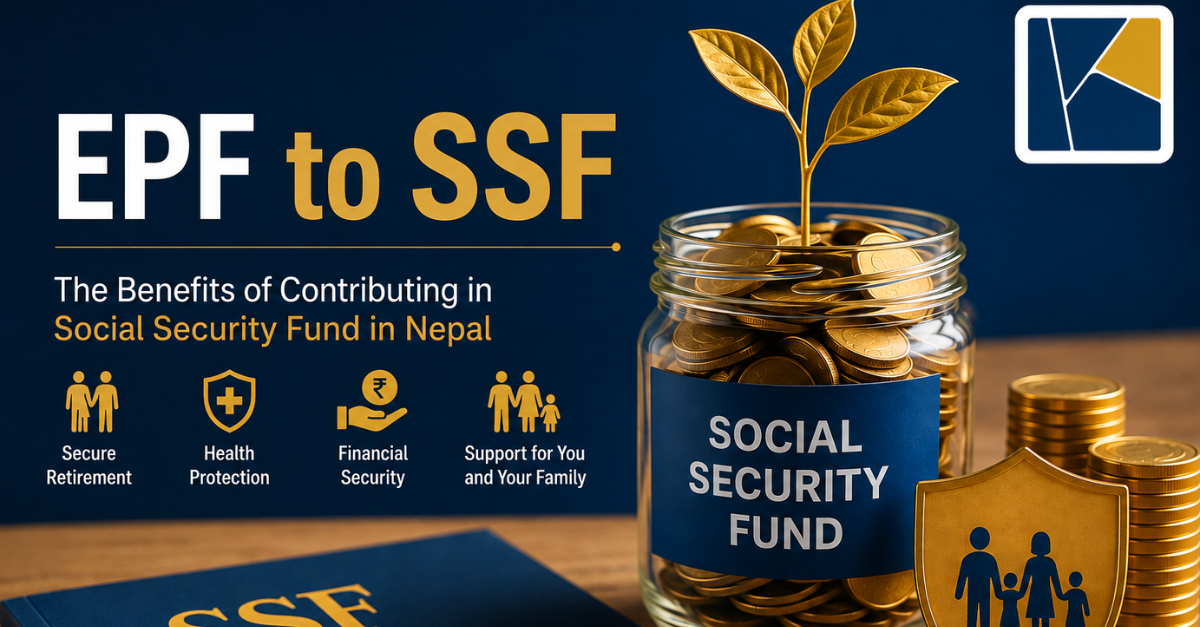
Your old EPF only ever did one thing: save toward retirement. SSF does four: retirement, medical care, accident protection, and support for your family if something happens to you. You’re paying more into it than you paid into EPF, but you’re also getting a lot more back, starting well before retirement.
What’s actually coming out of your salary
SSF is calculated on your basic salary only — not your gross pay.
- You contribute 11% of basic salary
- Your employer adds 20%
- That’s 31% going into your account every month.
So, know about your basic pay, as every benefit of SSF is linked with your basic salary. You can simply ask your employer or take a look at your employment contract. Easy!
What you’re actually buying with that 31%
This is the part almost nobody explains well: that monthly contribution isn’t just a bigger retirement fund. It’s split across four separate protections, each with real, usable limits.
Get sick or need a hospital visit? You’re covered up to NPR 100,000 a year for hospitalization, and NPR 25,000 for outpatient visits like a doctor’s consultation or basic tests. This kicks in after just 3 months of contributing into the fund. Make sure your treatment is done in ssf-affiliated hospitals though.
Have an accident? If it happens at work, 100% of your treatment is covered irrespective of the hospital you visit for treatment. Even accidents outside work are covered up to NPR 700,000. This one’s active from your very first contribution.
What if something happens to you? Your spouse receives 60% of your last basic salary as a pension, for life. Your children get education support until they’re grown.
Retiring? After 15 years of contributions and turning 60, you get a monthly pension for the rest of your life; not just a one-time payout. Leave earlier than that, and you still walk away with a lump sum.
What happens to gratuity you’ve already earned?
This worries a lot of people, understandably. If your employer previously ran a separate PF/gratuity setup, that balance doesn’t disappear and it doesn’t automatically move anywhere without your knowledge either. Typically, you have a few options: it can be transferred into your SSF account under a defined process, left untouched in your existing account, or withdrawn by you directly. If you’re unsure which option applies to you, it’s worth asking HR directly.
So is SSF actually better than EPF?
In almost every way that matters day to day, yes.
EPF gave you a retirement fund and nothing else. No medical cover, no accident protection, and it stayed tied to whichever employer you were with. SSF gives you all four protections, and your account follows you for life, across every job you ever have. The one real tradeoff: your money is somewhat less liquid than it was under EPF, since most of your old-age contribution stays locked until retirement rather than being withdrawable whenever you leave a job.
What to actually do with this information
You don’t need to manage much. SSF runs largely on autopilot once you’re enrolled. But a few things are worth knowing:
- You have an 11 digit SSF ID that’s yours for life, no matter how many jobs you change
- You can check your balance anytime through ssf.gov.np, the SSF app, or by texting “SSF” to 41042
- After 3 years of contributing, you can borrow against your fund.
- If you ever need to make a claim; medical, accident, maternity or pension, it goes through the SSF portal or your nearest office.
The system works quietly in the background. But now, at least, you know what it’s actually doing for you.
Still have questions regarding SSF benefits? We’re glad to help.
Leave a Reply